The right van is 1,500 miles away. Driving it home costs days and a one-way flight; shipping it costs money but zero effort. Auto transport is a well-worn industry — here's how it actually works, what it costs, and how to avoid the sketchy operators.
Cost figures below are typical market ranges, not quotes. Actual prices vary with distance, route popularity, season, vehicle size, and fuel costs. Always get multiple quotes for your specific move.
Open vs. enclosed transport
| Open transport | Enclosed transport | |
|---|---|---|
| What it is | Multi-car trailer, van exposed to weather and road grime | Covered trailer, protected from weather and debris |
| Cost | Standard — the baseline price | Typically 40–60% more than open |
| Availability | Plentiful; most shipments go open | Fewer trucks; book further ahead |
| Best for | Most camper vans — they're built for the outdoors | High-end builds, fresh paint, six-figure vans |
For the vast majority of camper vans, open transport is fine. These are vehicles designed to live outside; a few hundred highway miles of exposure won't hurt them. Enclosed makes sense for a $150,000+ build with fresh paint or delicate exterior work — or if you just want maximum peace of mind and the budget allows.
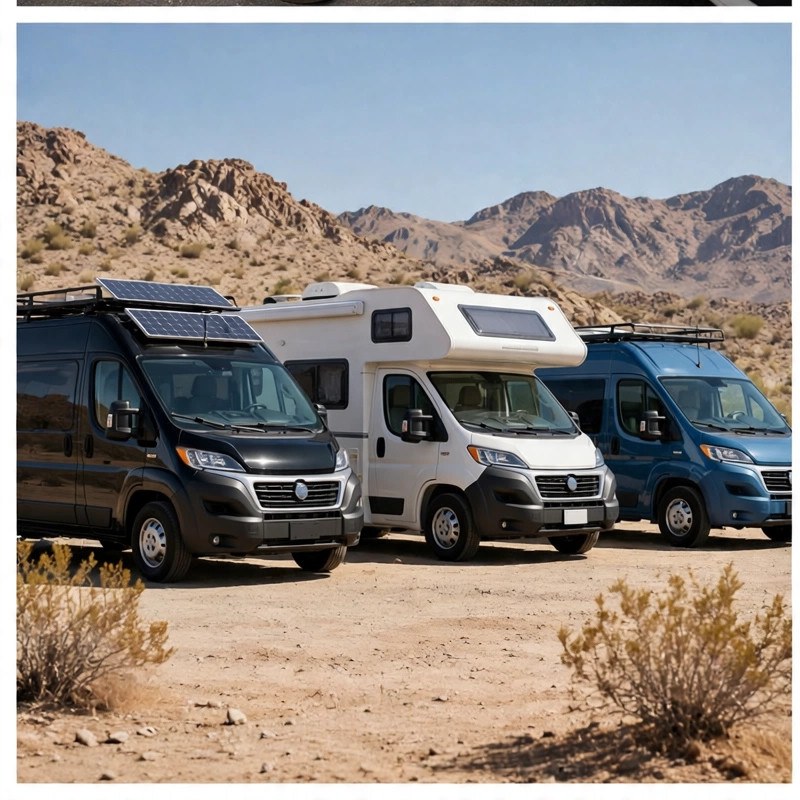
One van-specific note: height matters. High-roof Sprinters and Transits with roof racks, solar panels, or AC units can exceed standard trailer clearance. Measure total height (ground to highest point) and tell the transporter up front — it affects which truck they assign and sometimes the price.
Door-to-door vs. terminal
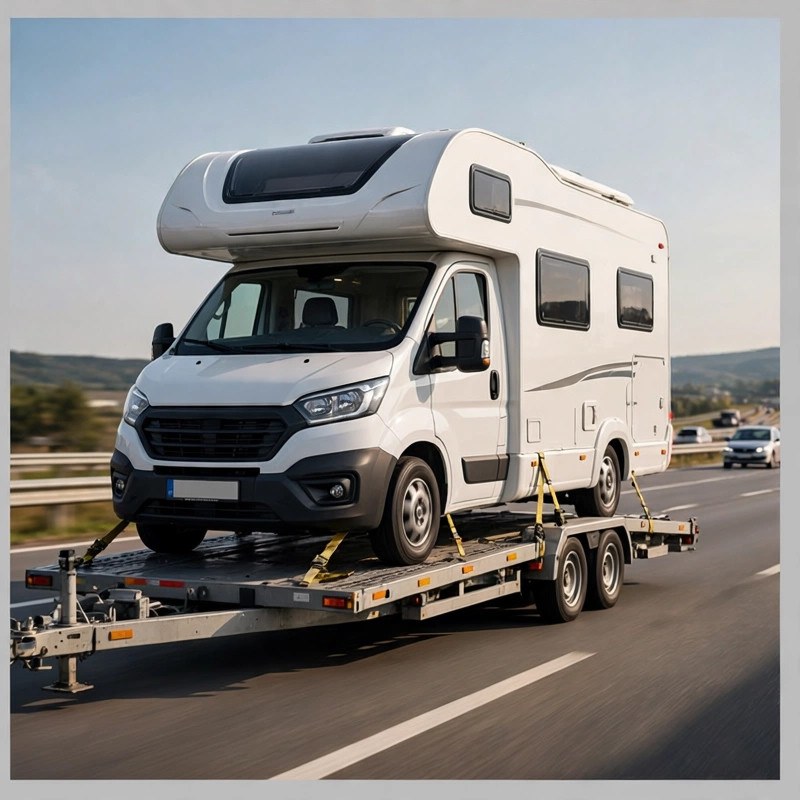
- Door-to-door — the truck picks up and delivers as close to your addresses as a 75-foot car hauler can physically get. In practice that often means a nearby parking lot or wide street, not your driveway. Most popular option.
- Terminal-to-terminal — you drop the van at a storage yard and pick it up at one near the destination. Cheaper, but adds storage fees, two extra trips, and days the van sits in a lot.
Door-to-door is worth the modest premium for most people. Terminals make sense if your schedule is flexible and the terminals are genuinely convenient — do the math on storage fees and your own driving time before assuming it's cheaper.
How the broker-vs-carrier market works
This is the part that confuses first-timers. There are two kinds of companies:
- Carriers own the trucks and do the driving.
- Brokers don't own trucks — they post your job to a national load board where carriers bid on it, then coordinate the shipment.
Most quotes you get online come from brokers, and that's normal — the industry runs on brokers. The price you pay is roughly the carrier's cut plus the broker's fee. A good broker earns it by finding a reputable carrier quickly and managing problems. A bad one lowballs the quote to win your business, then can't find a carrier at that price and your van sits unassigned for weeks.
If one quote is dramatically cheaper than the rest, it's not a deal — it's a broker who quoted below market to get your deposit. The carrier never materializes at that price, and you'll be asked for more money or left waiting. Clustered quotes are honest quotes.
What it costs
Typical market ranges for open, door-to-door transport of a standard camper van (remember the caveat above — these move with season, route, and fuel prices):
| Distance | Typical open-transport range |
|---|---|
| Under 500 miles | $500–$900 |
| 500–1,000 miles | $800–$1,300 |
| 1,000–2,000 miles | $1,100–$1,700 |
| 2,000+ miles (coast to coast) | $1,500–$2,200 |
What moves the price within (or beyond) those bands:
- Route popularity. Major corridors (LA–Dallas, Florida–Northeast) are cheap; rural Montana to rural Maine is not.
- Season. Snowbird season (fall southbound, spring northbound) spikes prices on those lanes.
- Vehicle size. Extended-length or high-roof vans take more trailer space; dually or extra-wide builds may need special placement.
- Operability. A van that doesn't run needs a winch to load — expect a non-running surcharge.
- Speed. Standard pickup windows are 1–5 days; guaranteed dates and expedited service cost more.
- Enclosed. Add roughly 40–60% over open.
How to vet a transporter
Whether broker or carrier, verify these before you book:
- Active MC (Motor Carrier) number. Look it up on the FMCSA's SAFER website. "Active" operating authority is non-negotiable — no MC number, no booking.
- Insurance. Ask for the carrier's certificate of insurance and confirm cargo coverage amounts. The broker's insurance is not the carrier's — you want the truck carrying your van insured.
- Reviews with substance. Check Google, BBB, and transport-specific review sites. Look for how they handle damage claims, not just star counts.
- Written terms. Get the quote, pickup window, cancellation policy, and damage-claim process in writing before paying anything.
- Deposit structure. Reputable brokers typically charge a small deposit at booking with the balance due at delivery (often cash or cashier's check to the driver). Full prepayment up front is a red flag.
Prep checklist before pickup
- Measure total height including roof rack, solar panels, vent fans, and AC — give the exact number to the transporter.
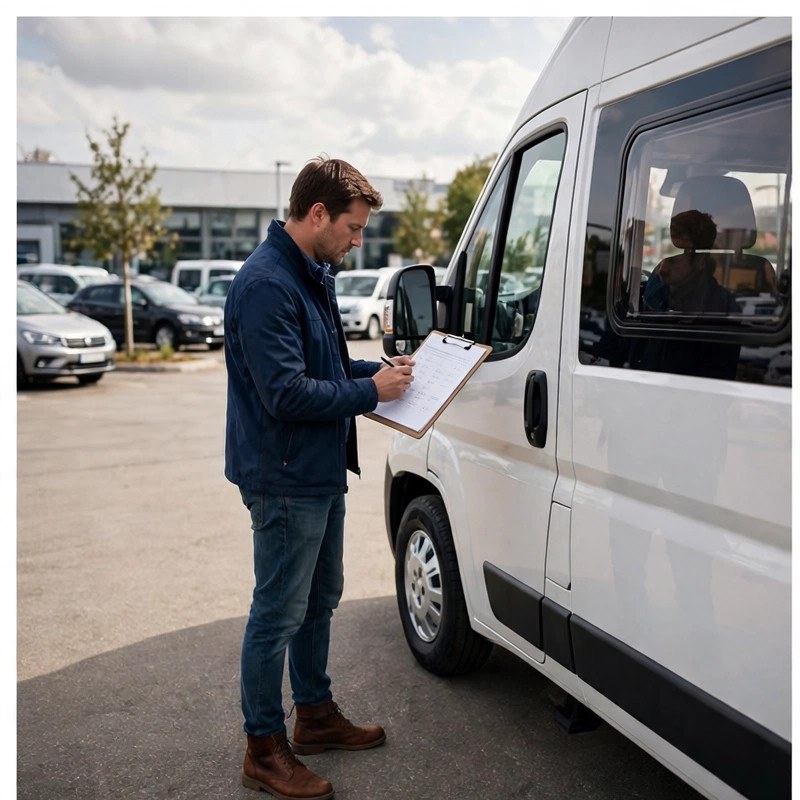
- Photograph everything. Walk around the van and photograph all four sides, the roof, and any existing damage, with timestamps. This is your evidence if a claim is needed.
- Remove or secure loose items. Take out valuables and anything not bolted down. Transporters' cargo insurance covers the vehicle, not your stuff inside — and most contracts exclude personal belongings entirely.
- Secure the interior. Cabinet doors latched, fridge locked, anything that can swing or fall tied down. Highway vibration finds every loose latch.
- Retract or remove what's fragile. Awnings in and locked, antennas down if possible, bike racks removed or secured.
- Leave ~1/4 tank of fuel. Enough to drive on and off the trailer, not so much it adds weight.
- Disable alarms and toll transponders. A car alarm going off for 1,500 miles helps no one; a toll transponder will rack up charges on the trailer's route.
- Note mechanical quirks. If the van needs a trick to start or has a sticky parking brake, write it down for the driver.
At delivery: inspection & the BOL
The Bill of Lading (BOL) is the single most important document in auto transport. The driver inspects the van at pickup and notes existing damage on the BOL; you (or your representative) do the same at delivery. Do this right:
- Inspect before signing. Walk the van in good light — daylight if at all possible. Compare against your pickup photos.
- Note any new damage on the BOL before you sign it. Be specific: "scratch, driver-side rear quarter panel, ~6 inches." Vague notes weaken claims.
- Take delivery photos. Same angles as your pickup photos.
- Never sign a clean BOL for a damaged van. Once you sign "received in good condition," your damage claim is effectively dead.
- File claims immediately. Report damage to the broker/carrier the same day, in writing, with photos. Deadlines in contracts can be short.
Designate someone you trust and brief them on this process. An unsigned or carelessly signed BOL is the #1 reason legitimate damage claims fail.
Red flags & scams
- No MC number or inactive authority — unlicensed operators have no insurance requirements and no accountability.
- Full payment demanded up front — standard is a small deposit, balance on delivery.
- Quote far below everyone else's — the lowball trap described above.
- No written contract — verbal quotes evaporate when there's a problem.
- "Guaranteed pickup date" at the cheapest price — guaranteed dates cost extra everywhere; someone promising both is promising fiction.
- Cash-only, no receipt — legitimate companies take cards or checks for deposits and give paperwork.
- Pressure to decide today — "this carrier leaves tomorrow, book now" is a sales tactic, not logistics.
Quick answers
How long does shipping take?
Transit itself is typically 1–2 days per 500 miles, but total time includes the pickup window (usually 1–5 days to assign a truck). Coast to coast commonly takes 7–14 days door to door.
Can I leave stuff in the van?
Transporters generally allow up to ~100 lbs of personal items below the window line, but they're not covered by cargo insurance. Valuables should never ride along.
Does my auto insurance cover the van during transport?
The carrier's cargo insurance is primary during shipment. Your own policy may or may not apply — check with your insurer, especially for high-value conversions (see our insurance guide).
Open or enclosed for a DIY build?
Open is fine for most vans — they're built for weather. Choose enclosed for six-figure builds, fresh paint, or maximum peace of mind.
What if the van doesn't run?
It can still ship, but tell the broker up front — non-running vehicles need a winch for loading and carry a surcharge. Surprising the driver with a dead van can mean a refused pickup.
Buying long-distance? Browse vans for sale → — and make sure the paperwork is clean with our titles & registration guide.